
A featured contribution from Leadership Perspectives: a curated forum reserved for leaders nominated by our subscribers and vetted by the Manage HR Advisory Board.

Sweco
The Role of Leadership in a Digitally Transforming HR Industry.
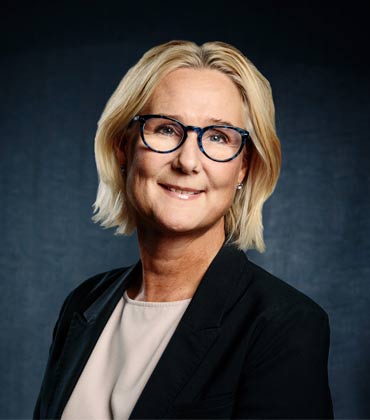
Helene Hasselskog
Ever since graduating, Helene Hasselskog has been working in the Human Resources field in the construction and consulting industries for decades. She has held the position of CHRO role for various publicly listed companies in the private sector. Over the course of her career, she traveled from HR specialist to CHRO and has set up her own space in people-intensive industries. Currently, Helene holds the position of CHRO at Sweco.
How has your experience as an HR director and CHRO varied across different industries?
Based on my experience I would say the level of focus on HR topics differs from industry to industry. Working in a consultancy business places a strong emphasis on HR and makes HR even more strategic than in other businesses. In the last two years, the pandemic has caused a significant speed in terms of change. Hybrid working culture a byproduct of it has bought a radical change in terms of how, where, and what we work with and also in reassessing and redefining the value of work. This has resulted in a paradigm shift in how the HR team stays connected with the employees remotely, and in creating a culture of loyalty with them. Overall, our current working environment requires us to reassess and redefine both the value of work as well as the quality of leadership.
"The goal should be to strike a balance between using data to inform our decisions and improve our processes, and not letting it completely replace our judgment and expertise."
How do companies maintain high productivity levels and provide reassurance to employees in the middle of the challenges raised by the pandemic?
With the rise of the pandemic, I feel the challenge is how to create loyalty, culture, efficiency, creativity, and productivity in the new setting. As a people-oriented sector, leadership plays an important role in employee productivity and assurance. When it comes to leadership it is important the way we talk about ourselves and provides the employees with the purpose of why we are here. Especially when it comes to attracting and retaining talents it is extremely important to provide a purpose that people are attracted to like in terms of the larger picture. Leaders being empathetic and open to their employees' needs and providing growth opportunities and development is another crucial factor. Thus, creating a kind of psychological safety environment does have an effect on the outcome of the employee not just in performance but in terms of creativity and loyalty.
Can you please share your thoughts on HR digital transformation?
When it comes to the employee experience, there are a lot of possibilities for building a culture using VR and other online courses. In terms of data collection, the right data can reveal so much about employees' behavior. An important thing to be noted here is that we do run a risk of not kind of relying on our own judgment. This does not just apply to HR but to all domains. When it comes to understanding people in a more complex way that is still something that cannot be done using AI. Therefore, the ultimate goal should be to strike a balance between using data to inform our decisions, improve our processes, and not letting it completely replace our judgment as well as expertise.
Could you describe how you incorporated these technologies into the company and the challenges you encountered?
We mainly focus on three primary areas: digitalization, sustainability, and leadership. When it comes to digitalization, it is mainly to gain data to make the HR process impactful. Everything from promised appraisal to succession planning and onboarding.
However, we understand that digitalization calls for large-scale collaboration. When it comes to sustainability we carry out leadership that is sustainable in terms of making sure of our employees' well-being. Finally, we focus on updated leadership to meet the demands of the future and the new norm. It is essential to adapt and evolve as times change.
How do you envision the future of the HR industry a couple of years down line?
I think in the future, we will be more data-driven but we will also have a closer relationship with the business and the decisions being made. When it comes to human resources, I think we need to update our leadership style. The real magic happens when we work together and avoid working in silos, so we can better understand the pain points of the business and provide support using our experience and knowledge.
Can you give a piece of advice to the upcoming professionals in this field?
I believe that it is extremely important to maintain a high level of curiosity about your business, and the data available, to adjust to new knowledge that we come across to make sure we stay relevant.
The articles from these contributors are based on their personal expertise and viewpoints, and do not necessarily reflect the opinions of their employers or affiliated organizations.
Be first to read the latest tech news, Industry Leader's Insights, and CIO interviews of medium and large enterprises exclusively from Manage HR Magazine
